
The cereal sector represents a fundamental component of Italian agriculture, both in economic terms and for its strategic role in food security and the agri-food value chain.
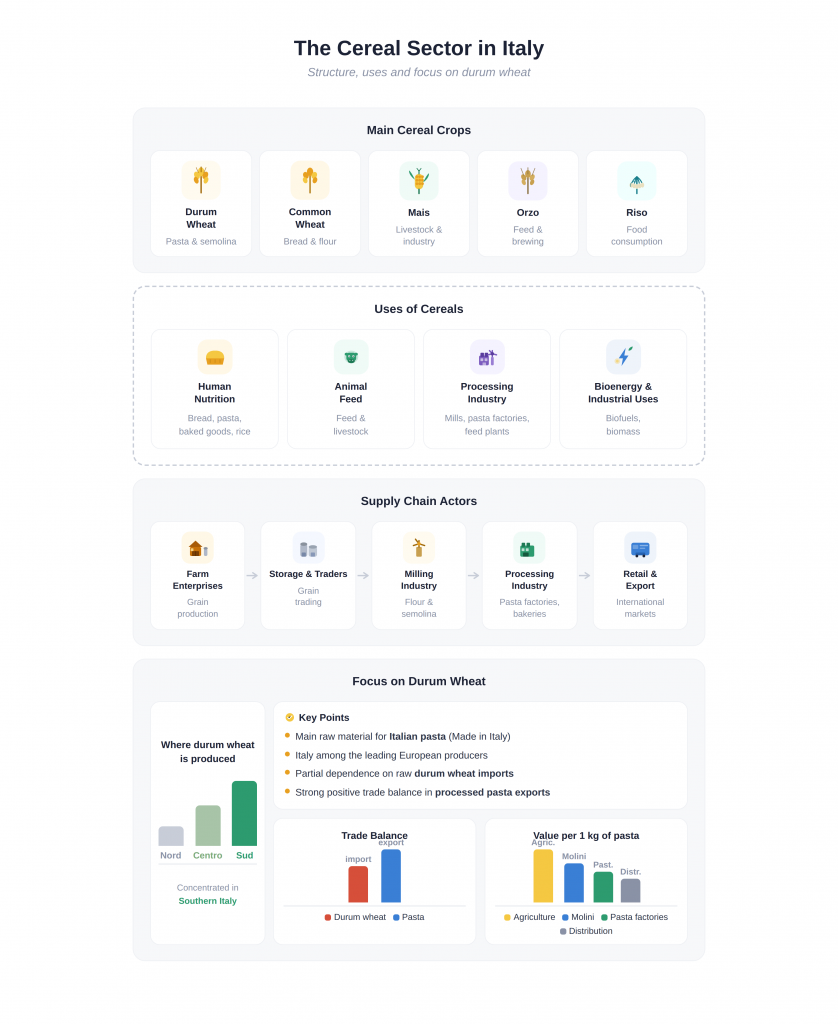
Main cereal crops
- Durum wheat (mainly used for pasta production).
- Soft wheat (bread, bakery products, flour).
- Maize (animal feed and food industry).
- Barley (feed and brewing industry).
- Rice (direct human consumption).
Uses of cereals
- Human consumption (bread, pasta, bakery products, rice).
- Animal feed (livestock sector).
- Processing industry (milling, pasta production, feed industry).
- Bioenergy and industrial uses.
Main actors in the value chain
- Farms and primary producers.
- Storage operators and grain traders.
- Milling industry (flour and semolina production).
- Processing industry (pasta makers, bakeries, feed producers).
- Retail sector and large-scale distribution.
- International markets and import/export operators.
Economic characteristics
The cereal sector accounts for a significant share of total crop production value in Italy. It is exposed to international price volatility, energy costs, and climate-related risks. Competitiveness depends on production efficiency, vertical coordination, and the capacity to add value through processing.
Focus: Durum Wheat
Durum wheat plays a strategic role in Italy as the primary raw material for pasta production, one of the flagship products of the Italian agri-food sector.
Area and production
Italy is among the leading European producers of durum wheat. Cultivation is mainly concentrated in Southern regions, with Puglia playing a particularly important role.
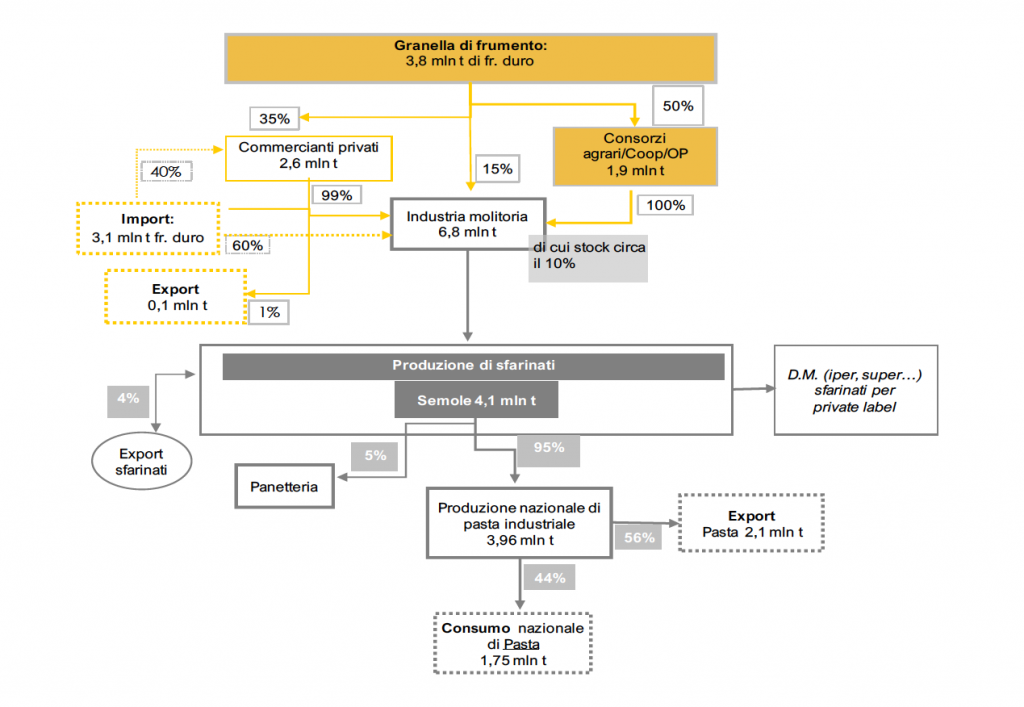
Structure of the durum wheat chain
- Agricultural production of grain.
- Processing into semolina by milling companies.
- Pasta production by pasta manufacturers.
- Domestic distribution and export.
Trade dynamics
The Italian system shows partial dependence on raw grain imports, but records a strong positive balance in pasta exports, reflecting the country’s high industrial capacity.
Challenges and outlook
- Climate variability and production risks.
- International price volatility.
- Environmental sustainability and input reduction.
- Technological innovation and precision agriculture.
- Strengthening the national supply chain.
Product flows along the supply chain (2023)