
Simulating how green policies may influence production decisions and environmental outcomes in the Italian wheat sector
The simulation experiments in the ECOWHEATALY project examine policies implemented under the Common Agricultural Policy that aim to reduce the environmental impact of agricultural production by promoting crop diversification and lowering the use of chemical inputs, such as fertilizers and pesticides, in particular:
• Eco-scheme 4 (crop rotation)
• Measure SRA19 (Sustainable and Reduced Use of Pesticides)
• Measure SRA20 (Sustainable Nutrient Management).
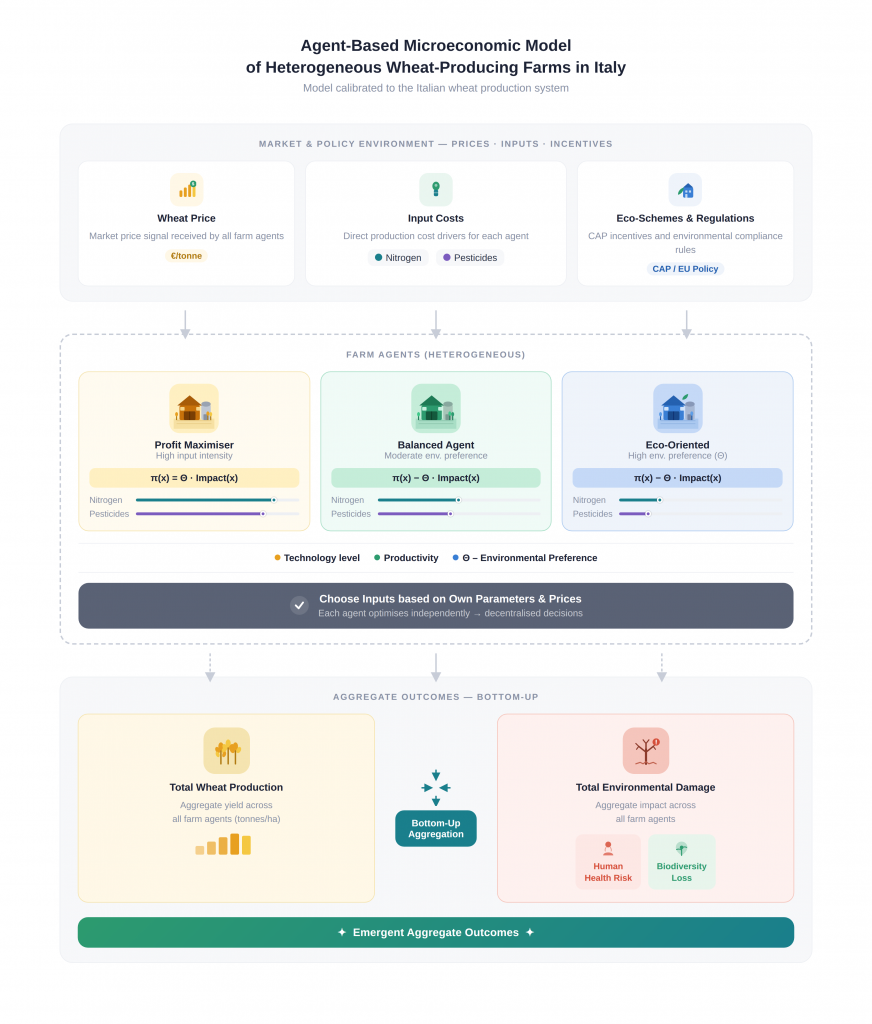
Model Framework
Major details are provided in Deliverable D1
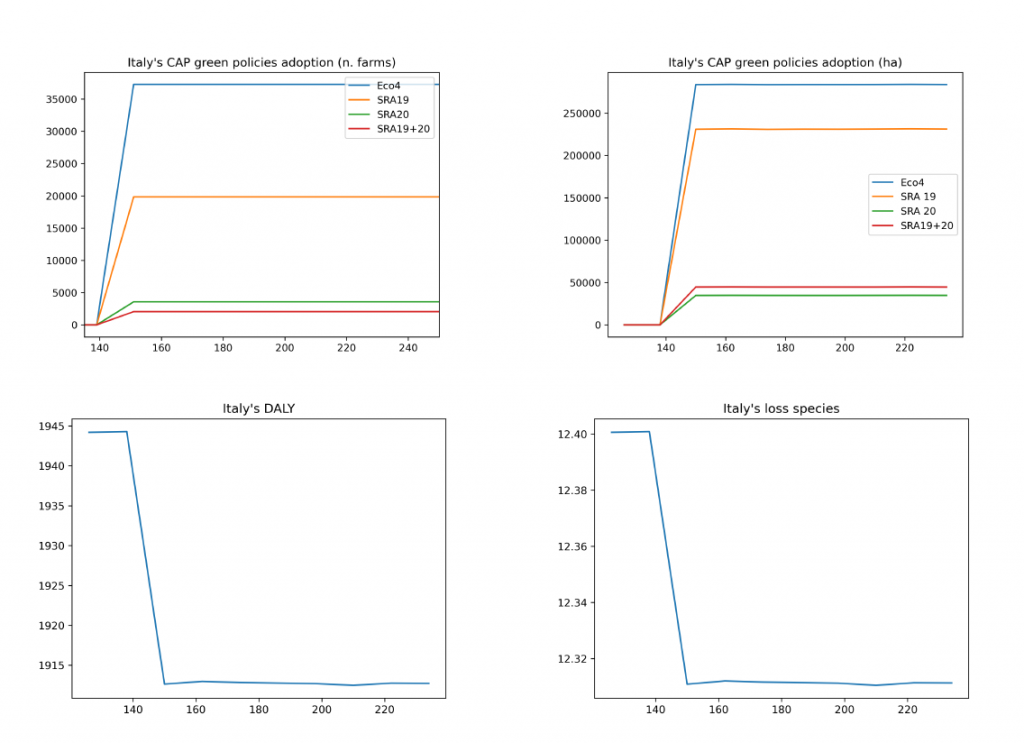
General results in tranquil times
- The results highlight the importance of considering both economic and environmental dimensions when evaluating agricultural policy interventions. Environmental policies may generate positive sustainability outcomes by reducing input intensity and associated emissions, but their economic implications depend on farmer responses and on prevailing market conditions.
- The simulations also illustrate how external shocks affecting the global wheat market may propagate through international trade networks and influence domestic production decisions. Changes in prices, trade restrictions, or supply disruptions can significantly alter the incentives faced by farmers, thereby affecting both production levels and environmental impacts.
Major details can be found in the Deliverable D2
Specific results
Specific results under a global shock
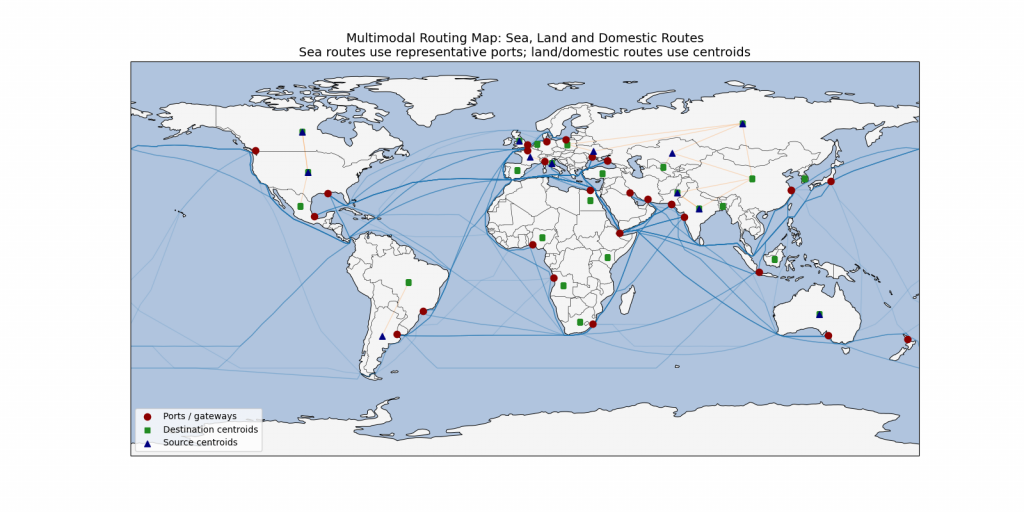
In addition, the ECOWHEATALY experiment simulates the effects of the Russia–Ukraine war on global wheat trade and assesses the interaction between food security concerns and environmental policies. A map showing the hubs and routes of global wheat trade considered in the model is provided.
The simulations show three main results:
- First, the disruption of Ukrainian exports generates a large increase in international wheat prices and induces a reallocation of trade flows towards alternative exporters
- Second, the price increase stimulates a supply response in Italy, leading to higher wheat production and greater use of productive inputs
- Third, when a green policy such as SRA20 is abandoned after the shock, production expands further, and international price pressures are partially mitigated, but this comes at the cost of worsening environmental indicators.
Major details can be found in the Deliverable D3